If you own a home in Montreal’s West Island and you’ve been watching the market thinking, “Is 2026 my year to sell?” you’re not alone.
Most homeowners are asking the same two questions:
What changed in 2025?
And what does 2026 look like?
Let’s break it down.
What Stood Out Most in 2025
Single-family homes saw an unusual mix of conditions:
Prices were up 8%
Sales were up 8%
Active listings were also up 7%
In many markets, stronger demand pulls inventory down. In 2025, supply increased and the market still absorbed it. That tells us buyer demand had real depth, but it also revealed something even more important for sellers.
Buyers Were Selective
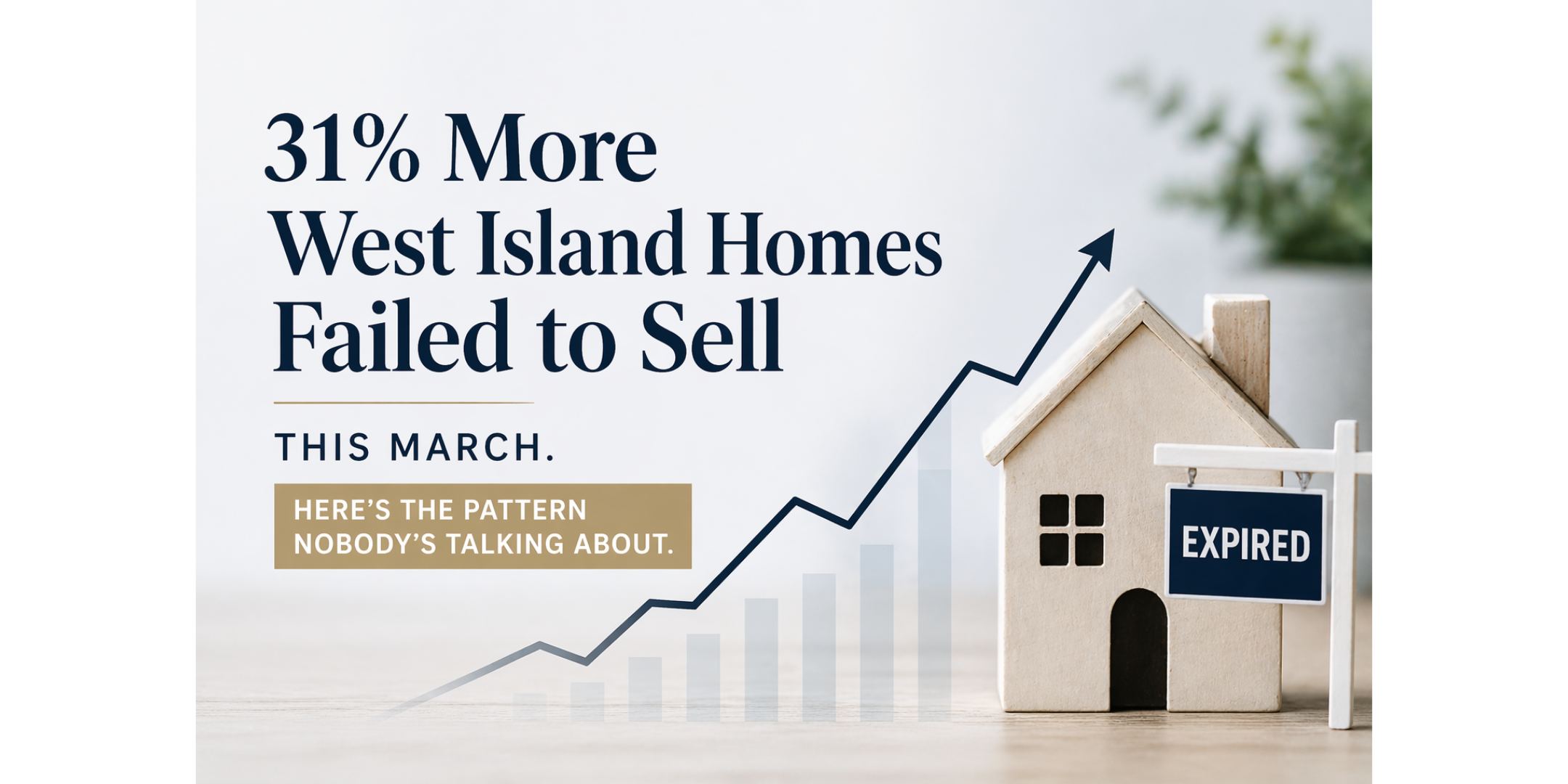
Despite a strong market, we saw more expired listings in 2025.
That’s a clear signal that buyers moved quickly past homes that weren’t positioned properly.
We helped several sellers who were unsuccessful with another broker, and the pattern was consistent. It usually came down to positioning, not price.
Why Strategy Matters More in 2026
When inventory is rising, you don’t win by “testing the market.”
You win by choosing:
The right price positioning strategy
A smart preparation plan
A launch strategy that matches the real competition buyers are comparing your home to that week
We work with many homeowners, and the biggest difference in results comes down to one thing: strategy.
Timing, price positioning, and presentation all drive your net outcome. And because every pocket of Montreal behaves differently, we take a highly customized approach when advising sellers. There’s no one-size-fits-all plan when the goal is the best possible result.
2026 Outlook: Steady Upward Pressure
Looking ahead, Royal LePage is forecasting continued growth in Greater Montreal:
Detached homes projected up ~6% in Q4 2026 versus Q4 2025
Condos projected up ~2.5%
This is not a bidding-war, pandemic-style year.
It’s more like steady upward pricing pressure, assuming interest rates and the broader economy don’t throw up major surprises.
Rates: Why They Matter
Interest rates change buyer behavior quickly.
We saw this clearly as the market picked up with each successive rate cut after inflation cooled a little over a year ago.
The Bank of Canada policy rate is currently 2.25%. Most indicators point to a hold early in 2026, with some risk of higher rates later in the year if inflation re-accelerates.
Condo Buyers and Owners: Pay Attention
Condo prices and sales were up in 2025, but inventory increased much more sharply.
The bigger issue is regulatory.
Quebec’s condo rules have changed. The regulation implementing Bill 16 came into force on August 14, 2025, introducing requirements such as:
A mandatory maintenance logbook
A recurring contingency (reserve) fund study
Why this matters:
Many buildings are underfunded. As reserve fund studies are updated, some condo owners are seeing fee increases and, in some cases, significant special assessments.
Buyers: don’t buy a condo based only on the unit. Buy it based on the building’s financial health and governance.
Revenue Properties: Strong Demand, Changing Buyers
Revenue properties also had a strong 2025:
Prices up
Sales up
Inventory up
What’s changing is the buyer profile.
We’re seeing more owner-occupant investors using duplexes and triplexes as an entry point into the market. Rising affordability pressures and the realities of condo fees and reserve funds are pushing some buyers in this direction.
What We’re Watching in 2026
Days on market by price bracket in the West Island
Inventory in your specific micro-area, not “Montreal” broadly
Rate announcements and shifts in buyer confidence
Condo reserve fund compliance and its ripple effect on fees and assessments
Thinking About Selling in 2026?
If you’re even thinking about selling in 2026, download our Seller’s Roadmap. It’s our advisor-led plan for listing prep, price positioning, and launch strategy, tailored to your micro-market.